
Introduction
An early shift starts, and the floor is a blur of pallets, scanners, and quiet pressure. A lifting robot hums past the rack, dodging a rush order as a picker calls for help with a heavy crate. In many sites, the figures tell a plain story: thousands of kilos moved per hour, near-constant micro-stops, and strain injuries that still sneak in despite training. Add to that 15–20% of unplanned downtime tied to small glitches—battery swaps, flaky sensors, crowding. It’s a wee reminder that speed without smarts soon hits a wall (aye, we’ve all been there).
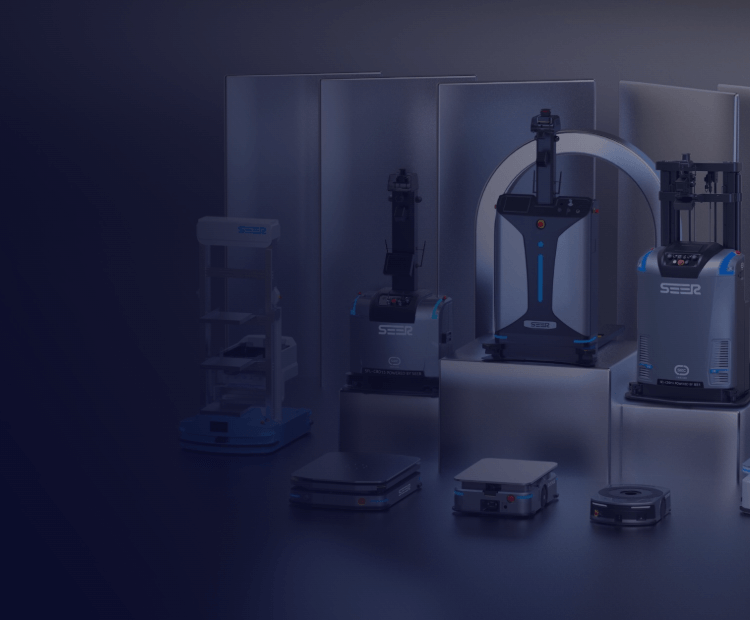
Here’s the rub: the kit is getting stronger, but not always wiser. Force-torque control helps, as do LiDAR maps, better motor drives, and cleaner handoffs to safety PLCs. Yet the daily flow still stutters when data is late, routes clash, or the load shifts mid-lift. So, what if the benchmark isn’t power alone, but smooth moves, fewer lifts per job, and fewer hands in the danger zone? Let’s set the stage, compare what matters, and see where smarter lifting changes the day. On we go—to the root causes and the path forward.
The Deeper Issue: Why Old Hoists Lag When Workloads Get Messy
Where do legacy hoists fall short?
In Part 1, we sketched the basics of safe, repeatable handling. Now we’ll go under the skin. The core gap isn’t lifting force; it’s context. A traditional hoist can pull its rated load, but it can’t reason about the job in motion. The weight lifting robot does more because it pairs lift with live judgement—edge computing nodes stream sensor data, safety PLC logic guards human space, and power converters modulate torque as the payload wobbles. Legacy rigs miss this loop. They over-correct, or under-react, when the pallet is skewed by 12 mm or the floor dips. Look, it’s simpler than you think: control without awareness equals stop-and-go, and stop-and-go multiplies risk.

Consider how “rated payload capacity” gets misread. On paper, both systems may lift 500 kg. In practice, a mixed load with soft packaging needs gentle force ramps, inertial sensors to catch sway, and path nudges at the last meter. Without that stack, operators compensate—hands on the load, manual taps on the pendant, extra pauses. That adds cycle time and stress—funny how that works, right? Meanwhile, the robot with edge checks trims lift acceleration, re-aims a few degrees, and parks with fewer micro-stops. The old setup will do the job, aye, but only if people do the thinking. And that’s no wee detail.
Ahead of the Curve: Principles That Make Smarter Lifts Win
What’s Next
From here, the comparison turns on one principle: adapt in real time, or fall behind. Modern systems fuse LiDAR, vision, and load cells to shape each move, not just the first one. They push decisions to the floor via edge computing nodes, keeping latency low when the aisle tightens or a pallet leans. The same weight lifting robot that trimmed sway a moment ago can re-route two meters out, balance torque with smart motor drives, and preserve the load. Underneath, you’ll find clean kinematics models, predictive diagnostics on gear wear, and battery management that schedules charge windows around the shift—not the other way round. It’s semi-formal in tone, but very practical: fewer contacts, fewer corrections, fewer near-misses.
Think on a near-term outlook. Sites that swap from fixed hoists to coordinated mobile lifts see two levers move: path efficiency and repeatability. The first slashes steps between pick and drop; the second reduces surprises at the last inch. Over weeks, that shows up as steadier cycle time variance, quieter error logs, and less call for spotters. The weight lifting robot also raises visibility; ROS-style middleware and event tags make anomalies easy to trace, while safety PLC states stay auditable. Summing up: power still matters, but awareness and timing matter more. If you’re choosing a path, weigh three metrics—1) cycle time under load variance (flat is good), 2) safety integrity level coverage across zones, and 3) total cost per ton moved, including energy and maintenance. Meet those, and your floor runs calmer, faster, and kinder to people. For further study of these design patterns, see SEER Robotics.